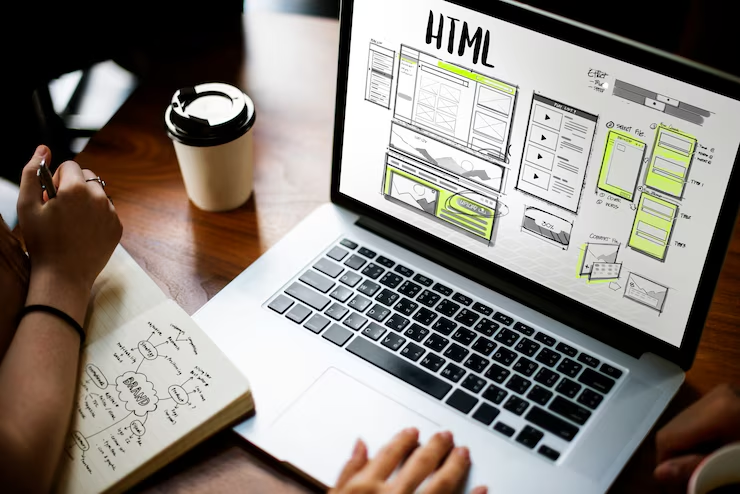
Web Portal Development Company: The Backbone of Digital Transformation
In todays digital era, the demand for seamless, efficient, and user-centric web portals has reached unprecedented heights. Organizations, ranging from small startups to large enterprises, require robust online platforms that can handle a range of business operations, customer interactions, and data management. As the world moves towards automation and digital solutions, web portals have become the essential means to connect users with services and information. This is where web portal development companies come into play.
What is a Web Portal?
A web portal is a website or platform that serves as a gateway to various services, applications, information, and resources. It acts as a centralized point where users can access data, interact with services, and manage different tasks. Web portals can be categorized into several types, including:
Corporate Portals: Used by businesses to offer employees, partners, and customers a central point for accessing internal information and resources.
E-commerce Portals: Online stores that allow users to browse products, make purchases, and interact with customer service.
Educational Portals: Platforms that provide learning materials, online courses, and resources for students, teachers, and educational institutions.
Government Portals: Designed to offer citizens access to services, forms, and government-related information.
Healthcare Portals: Used by healthcare providers and patients for appointment scheduling, medical records, and communication.
Social Portals: Social networking sites that connect individuals to interact, share content, and engage in discussions.
The Role of a Web Portal Development Company
A web portal development company specializes in creating and maintaining customized web portals that cater to the unique needs of businesses and organizations. These companies offer comprehensive services, from initial consultation to the deployment and ongoing maintenance of web portals. Their role is to understand the requirements of the business, design a functional architecture, and implement the portal with high scalability, security, and user-friendliness.
Let’s delve into the various aspects of a web portal development company and how they contribute to the success of digital transformation.
1. Consultation and Requirements Gathering
The journey of developing a successful web portal starts with thorough consultation. A web portal development company begins by understanding the client’s business objectives, target audience, and specific needs. This phase involves gathering detailed requirements and identifying the features and functionalities that the portal should offer.
Key activities include:
Conducting interviews with stakeholders.
Mapping user personas and defining user journeys.
Understanding the technical needs of the business.
Identifying pain points and opportunities for improvement.
This step is crucial as it sets the foundation for the design and development phases. A well-defined requirements document ensures that the web portal is tailored to meet the expectations of the end-users while aligning with business goals.
2. Designing a User-Centered Experience
User experience (UX) design is at the heart of any web portal’s success. The design needs to be intuitive, easy to navigate, and aesthetically pleasing to ensure user engagement. A web portal development company works with experienced designers to create an interface that is user-friendly and meets the expectations of the target audience.
The design process typically includes:
Wireframes and prototypes: These are created to outline the layout and basic structure of the portal.
UI design: Crafting a visually appealing interface using branding elements and color schemes.
Responsive design: Ensuring the portal is mobile-friendly and accessible across various devices.
Usability testing: Testing the design with real users to gather feedback and make necessary improvements.
The goal is to create an interface that is simple yet functional, ensuring that users can easily find the information or services they need.
3. Development and Integration
Once the design phase is complete, the development process begins. A web portal development company utilizes the latest technologies and frameworks to build a highly functional platform. The development team works on both the front-end (user interface) and back-end (server-side) components to ensure that the portal operates smoothly and efficiently.
Key technologies and frameworks used for development include:
Frontend development: HTML, CSS, JavaScript (React, Angular, Vue.js, etc.).
Backend development: PHP, Node.js, Python, Ruby on Rails, or Java.
Databases: MySQL, MongoDB, PostgreSQL, or Oracle.
APIs: RESTful APIs or SOAP to enable integrations with other systems.
Cloud Services: Amazon Web Services (AWS), Microsoft Azure, or Google Cloud for hosting and scalability.
In addition to core development, the company may also integrate third-party services or tools, such as payment gateways, CRM systems, or analytics tools, depending on the client’s needs. Integration ensures that the portal is seamlessly connected to other business systems, improving overall efficiency and user satisfaction.
4. Security Implementation
With increasing concerns over data privacy and cyber threats, security is a top priority for web portal development companies. A secure web portal is crucial, especially when dealing with sensitive data such as customer information, financial transactions, or health records.
A web portal development company employs various security measures to protect the platform, including:
SSL encryption: Securing the transmission of data between the server and the user.
Authentication mechanisms: Implementing user login systems, multi-factor authentication (MFA), and role-based access control (RBAC).
Data encryption: Encrypting sensitive information stored in the database.
Regular security audits: Conducting vulnerability assessments and penetration testing to identify potential security flaws.
Compliance: Ensuring that the portal complies with industry regulations such as GDPR, HIPAA, or PCI-DSS.
Security is not just a one-time implementation; it is an ongoing process. A reputable web portal development company will continue to monitor and update the platform to safeguard against emerging threats.
5. Testing and Quality Assurance
Before the portal goes live, it undergoes rigorous testing to ensure that it functions correctly and meets the client’s requirements. Quality assurance (QA) is an integral part of the development process and helps identify and resolve any issues before launch.
Testing typically includes:
Functional testing: Ensuring that all features and functionalities are working as expected.
Performance testing: Evaluating the portal’s performance under various conditions, such as high traffic volumes.
Usability testing: Ensuring that the portal is user-friendly and meets usability standards.
Security testing: Identifying vulnerabilities and ensuring data protection mechanisms are in place.
Cross-browser and cross-device testing: Ensuring compatibility across various browsers and devices.
Testing ensures that the web portal is of the highest quality, offering a smooth and efficient experience for users.
6. Launch and Ongoing Support
After the portal has been tested and is ready for launch, the web portal development company assists with the deployment process. They ensure that the platform is launched smoothly, with minimal downtime and disruption. This may involve configuring the server, setting up cloud hosting, and managing domain registration.
However, the work does not end with the launch. Ongoing support and maintenance are crucial to ensure that the web portal continues to function optimally. A web portal development company provides post-launch support services such as:
Bug fixes: Addressing any issues that arise after the portal is live.
Updates: Rolling out software updates to improve functionality or security.
Scalability: Ensuring that the portal can handle increased traffic or new features over time.
Performance monitoring: Monitoring the portal’s performance and ensuring it is running smoothly.
7. Benefits of Hiring a Web Portal Development Company
Hiring a professional web portal development company offers several advantages:
Expertise: A team of skilled professionals with expertise in web development, design, security, and performance.
Customization: Tailored solutions that meet your specific business needs.

Scalability: The ability to scale the portal as your business grows.
Cost efficiency: Avoiding the high costs and risks associated with developing an in-house team.
Time-saving: Faster development and deployment, allowing businesses to focus on their core operations.
Web portals have become a cornerstone of digital transformation, enabling businesses to offer seamless online services and improve communication with customers, employees, and partners. A reliable and experienced web portal development company can help businesses create customized portals that meet their specific needs, ensuring a superior user experience, enhanced security, and long-term success. Whether its a corporate portal, e-commerce site, or healthcare platform, these companies provide end-to-end solutions that drive innovation and business growth in a digital-first world.