Web Design and Development Companies: A Comprehensive Overview
Introduction
In today’s fast-paced digital age, having an online presence is a necessity for businesses of all sizes. Whether you are a small business owner or the CEO of a large corporation, your website acts as the digital face of your company. As a result, the role of web design and development companies has become paramount. These companies specialize in creating user-friendly, functional, and aesthetically pleasing websites that help businesses connect with their target audience, improve their brand image, and increase their revenue.
Web design and development are two distinct yet interconnected fields that play a significant role in building an online presence. Web design focuses on the look, feel, and overall user experience of a website, while web development deals with the functionality and technical aspects of creating a website. To create a successful website, both aspects must work harmoniously.
This article delves into the role of web design and development companies, their key services, the process they follow, and what to look for when choosing the right company for your business needs.
What is Web Design?
Web design is the process of planning and creating the visual layout, structure, and user interface of a website. It involves everything from the design of the homepage to the overall aesthetic appeal of the site. Web design aims to create an engaging and visually appealing online experience for users while ensuring that the website is intuitive and easy to navigate.
Key Elements of Web Design:
Layout: This refers to how the elements of a webpage are arranged. A clean, organized layout enhances user experience and makes the content easy to digest.
Typography: The font style, size, and spacing play a crucial role in readability and user experience. Designers ensure that text is easy to read and consistent throughout the site.
Color Scheme: The use of colors in web design is critical in evoking emotions and enhancing brand identity. Color choices should align with the brand and provide a pleasant user experience.
Imagery: High-quality images and videos are often used to make a website visually appealing. These elements should be optimized for fast loading and consistency with the website’s theme.
Responsive Design: With users accessing websites on a variety of devices, responsive web design ensures that a website looks and functions well on desktops, tablets, and smartphones.
What is Web Development?
Web development, on the other hand, refers to the technical process of building and maintaining a website. It involves coding and programming the back-end and front-end of a website to ensure that it functions properly. Web developers use various programming languages such as HTML, CSS, JavaScript, PHP, and others to bring the design to life and make it interactive.
Web development is divided into two main categories:
Front-End Development: Also known as client-side development, this involves creating the visual elements of a website that users interact with directly. It is responsible for making the website look good and function well across different devices.
Back-End Development: This is the server-side of web development that handles the database, server, and application logic. Back-end developers ensure that the website functions smoothly, loads quickly, and handles user requests effectively.
Key Programming Languages Used in Web Development:
HTML (HyperText Markup Language): The standard markup language used to create web pages. HTML defines the structure of a webpage.
CSS (Cascading Style Sheets): CSS is used for styling and formatting the layout of web pages. It allows developers to control the appearance of elements, such as colors, fonts, and spacing.
JavaScript: A programming language used to create interactive elements on a website, such as buttons, forms, and animations.
PHP: A server-side scripting language used to create dynamic web pages and web applications.
Python, Ruby, and Java: These languages are often used for more complex back-end development tasks and web applications.
The Role of Web Design and Development Companies
Web design and development companies combine the expertise of both designers and developers to create websites that are not only visually stunning but also highly functional. These companies typically offer a full suite of services, from conceptualizing and designing a website to building and maintaining it.
Key Services Offered by Web Design and Development Companies:
Custom Web Design: Many web design and development companies offer custom web design services, ensuring that your website aligns with your brand’s identity and meets the specific needs of your target audience. Custom designs are essential for businesses that want to stand out in a crowded marketplace.
Responsive Web Design: With the increasing use of mobile devices, responsive design has become an essential feature of modern websites. Web design and development companies ensure that websites are optimized for different screen sizes and devices, providing a seamless experience for all users.
E-Commerce Development: For businesses that want to sell products or services online, web development companies can build e-commerce platforms using platforms like Shopify, WooCommerce, or custom solutions. E-commerce development includes everything from setting up payment gateways to creating secure checkout processes.
Search Engine Optimization (SEO): Web design and development companies often provide SEO services to ensure that your website ranks well in search engines. This includes optimizing your site’s structure, content, and technical aspects to improve its visibility.
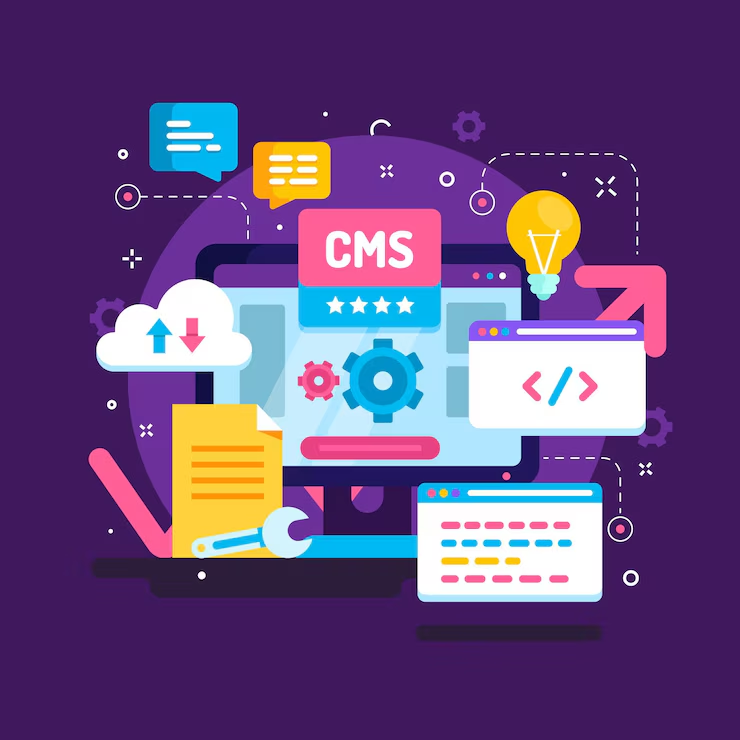
Content Management Systems (CMS): Many web development companies specialize in creating websites with CMS platforms such as WordPress, Joomla, and Drupal. These platforms allow businesses to easily manage and update their website content without needing technical expertise.
Web Application Development: Companies also develop web applications that enhance website functionality, such as customer portals, booking systems, and user dashboards. Web applications often provide a more interactive and engaging user experience.
Website Maintenance and Support: After a website is launched, it requires ongoing maintenance to ensure it stays up-to-date, secure, and free from technical issues. Web design and development companies often offer maintenance and support packages to help businesses keep their websites running smoothly.
Website Redesign: Over time, a website may become outdated. Web design and development companies can redesign websites to make them more modern, mobile-friendly, and aligned with current trends and technologies.
The Web Design and Development Process
The process of creating a website is collaborative and involves several stages. A typical web design and development company follows these steps to ensure the successful creation of a website:
Discovery and Planning: The first step is understanding the client’s business, goals, target audience, and website requirements. This stage involves researching competitors, analyzing user behavior, and defining the scope of the project.
Design Phase: During this phase, the web design team creates wireframes and mockups based on the client’s needs and preferences. Feedback is collected from the client to refine the design.
Development Phase: After the design is approved, the development team begins coding the website. Front-end developers focus on creating the visual elements, while back-end developers work on the server-side functionality.
Testing and Quality Assurance: Before launching the website, it undergoes thorough testing to identify and resolve any bugs or issues. Testing ensures that the website works across different browsers and devices.
Launch: Once the website passes the testing phase, it is ready for launch. The website is deployed to a live server and made accessible to the public.
Post-Launch Support and Maintenance: After the website is live, the development company provides ongoing support to address any issues and ensure that the website continues to function smoothly.
How to Choose the Right Web Design and Development Company
Choosing the right web design and development company is crucial to the success of your website. Here are some factors to consider:
Portfolio and Experience: Review the company’s portfolio to assess the quality and style of their work. Look for companies with experience in your industry or niche.
Technical Expertise: Ensure that the company has the technical skills to meet your website’s requirements, whether it’s building an e-commerce platform, integrating a custom solution, or optimizing for SEO.
Client Reviews and Testimonials: Read client reviews and testimonials to gauge the company’s reputation and the quality of its work.
Communication and Collaboration: Choose a company that values open communication and is willing to collaborate with you throughout the project.
Support and Maintenance: Check if the company offers ongoing support and maintenance after the website is launched.
Web design and development companies play an integral role in helping businesses establish a strong online presence. With their expertise in both design and technical development, they can create websites that are visually appealing, functional, and user-friendly. Whether you need a simple website or a complex web application, these companies can turn your ideas into reality, ensuring that your business thrives in the digital world. Choosing the right company is essential, so take the time to research and select a partner that aligns with your goals and vision.
The digital landscape continues to evolve at breakneck speed, and having a strong online presence is essential for businesses of all sizes. Whether you’re launching a startup, revitalizing an established brand, or expanding into new markets, partnering with the right web design and development company can make the difference between simply existing online and truly thriving. This article delves into the world of web design and development firms, exploring what they do, why they matter, key factors to consider when choosing one, current industry trends, and how to select the best partner for your project.
What Are Web Design and Development Companies?
Web design and development companies specialize in creating, building, and maintaining websites and web applications. While the two disciplines overlap, they encompass distinct skill sets:
Web Design focuses on the aesthetics and user experience (UX) of a website. Designers craft layouts, color schemes, typography, imagery, and interactive elements to ensure the site is visually engaging and intuitive.
Web Development brings designs to life through coding. Developers handle front‑end tasks (HTML, CSS, JavaScript) that make the site interactive, and back‑end work (server‑side programming, databases, APIs) that powers data-driven functionality.
Most agencies offer end‑to‑end services, blending design and development expertise to deliver a seamless final product. Some firms emphasize one area over the other, so it’s crucial to understand your project’s needs.
Why Partner with a Professional Agency?
Expertise and Best Practices
Agencies employ specialists across disciplines—UX/UI designers, front‑end and back‑end developers, project managers, and quality assurance testers. This collective skill set ensures adherence to industry best practices in accessibility, performance optimization, and security.
Scalability and Support
As your business grows, so will your website’s requirements. Established firms can quickly scale resources to add new features, handle traffic spikes, and provide ongoing maintenance.
Time and Cost Efficiency
While hiring freelancers or an in‑house team may seem cost‑effective, managing multiple contractors or recruiting talent can be time‑consuming. Agencies offer a one‑stop shop, streamlined workflows, and predictable pricing models.
Holistic Strategy
Beyond building a site, agencies often offer strategic services—brand development, content strategy, SEO, digital marketing—that align your web presence with broader business goals.
Core Services Offered
Custom Web Design
Wireframing & Prototyping: Mapping user journeys and page layouts before visual design.
Responsive Design: Ensuring seamless experiences across devices (desktop, tablet, mobile).
Brand Integration: Aligning website aesthetics with brand identity.
Front‑End Development
HTML/CSS: Structuring pages and styling layouts.
JavaScript & Frameworks: Adding interactivity with libraries like React, Vue, or Angular.
Performance Optimization: Minimizing load times through code splitting, lazy loading, and asset compression.
Back‑End Development
Server‑Side Programming: Building logic with languages such as Node.js, Python, Ruby, or PHP.
Database Management: Designing and maintaining SQL/NoSQL databases.
API Integration: Connecting third‑party services (payment gateways, CRM systems, social feeds).
Content Management Systems (CMS)
Open‑Source Platforms: WordPress, Drupal, Joomla for flexibility.
Headless CMS: Decoupling content management from presentation using solutions like Strapi or Contentful.
Custom CMS: Building tailored systems for unique requirements.
E‑Commerce Solutions
Platforms: Shopify, WooCommerce, Magento.
Payment & Shipping Integration: Secure gateways, tax calculations, logistics partners.
Inventory & Order Management: Real‑time tracking, reporting dashboards.
Maintenance & Support
Security Patches & Updates: Keeping software up‑to‑date against vulnerabilities.
Performance Monitoring: Uptime tracking, speed audits.
Content Updates & Enhancements: Ongoing edits and feature roll‑outs.
Digital Strategy & Marketing
Search Engine Optimization (SEO): On‑page and technical tactics to boost visibility.
Content Strategy: Editorial calendars, blog/article creation, multimedia.
Analytics & Conversion Rate Optimization (CRO): Data‑driven improvements to increase user engagement and conversions.
Key Factors to Consider When Choosing an Agency
Portfolio and Case Studies
Review past projects to gauge design sensibility, technical prowess, and industry experience. Look for live websites, detailed case studies, and measurable outcomes (e.g., 40% traffic increase, 25% faster load times).
Technical Expertise
Ensure the agency has hands‑on experience with technologies relevant to your project: specific frameworks, CMS platforms, e‑commerce systems, or integrations.
Communication and Collaboration
Transparency, responsiveness, and a clear project management approach (e.g., Agile sprints, weekly stand‑ups, milestone reviews) are critical to staying aligned.
Budget and Pricing Model
Assess whether the agency uses fixed‑price, time‑and‑materials, or retainer models. Request detailed proposals and compare deliverables to costs.
Cultural Fit
A shared understanding of your brand’s vision and values fosters smoother collaboration. Personal rapport with the team you’ll work with every day matters.
Post‑Launch Support
Clarify service-level agreements (SLAs) for maintenance, bug fixes, and feature enhancements. Ask about response times and escalation procedures.
Emerging Trends in Web Design and Development
Jamstack Architecture
Decoupling front‑end and back‑end, serving pre‑rendered static content via CDNs, and using APIs for dynamic data to achieve blazing-fast performance.
Progressive Web Apps (PWAs)
Delivering app‑like experiences in the browser—offline capabilities, push notifications, and near‑native performance.
AI-Powered Design and Development
Leveraging machine learning for automated UI layout suggestions, code generation, chatbots, and personalized user experiences.
Motion and Micro‑Interactions
Subtle animations that guide users, provide feedback, and enhance engagement without overwhelming performance.
Accessibility-First Approach
Meeting WCAG guidelines from the outset to create inclusive experiences for users with disabilities, while also boosting SEO and overall usability.
Voice User Interfaces (VUIs)
Integrating voice search and commands, optimizing content for conversational queries.
Spotlight: Top Web Design & Development Companies
While the “best” agency depends on your unique needs, here are a few firms known for excellence across various scales:
Small to Mid‑Size Projects
Toptal: On‑demand marketplace for vetted freelance designers and developers; ideal for projects requiring specialized skills.
Blue Fountain Media: Offers end‑to‑end digital strategy, branding, and development tailored to SMBs.
Enterprise and Complex Builds
Cognizant Interactive: Part of a global consulting giant, with deep expertise in large‑scale digital transformations.
ThoughtBot: Well-known for Rails-based development, robust UX research processes, and long‑term partnerships.
E‑Commerce Specialists
Pixel Union: Shopify experts, popular themes, and custom storefront development.
Vaimo: Provides Magento and Shopify Plus solutions for mid‑market to enterprise-level retailers.
Design-Driven Agencies
Fantasy: Renowned for forward‑thinking UX/UI and high-fidelity prototypes for clients like Google, Xbox, and Toyota.
IDEO: Global design consultancy with a human-centered approach that extends to web and digital products.
How to Get Started
Define Goals and Requirements
Document your business objectives, target audience, feature list, budget range, and desired timeline.
Prepare an RFP or Brief
Create a concise Request for Proposal outlining scope, deliverables, technology preferences, and evaluation criteria.
Shortlist and Interview
Evaluate proposals, check references, and conduct discovery calls or workshops to assess cultural fit and understanding.
Pilot Engagement
Consider starting with a smaller pilot project—such as a landing page or proof of concept—to evaluate the working relationship.
Formalize and Kick Off
Sign contracts that clearly outline scope, milestones, payment terms, IP ownership, and termination clauses. Begin with a project kickoff workshop to align all stakeholders.
In an increasingly digital-first world, choosing the right web design and development company is pivotal to achieving your online goals. By understanding the services on offer, evaluating agencies against clear criteria, and staying abreast of emerging trends, you’ll be well-equipped to select a partner who can transform your vision into a compelling, high‑performance website or application. Remember: the best outcomes arise from collaborative relationships grounded in shared goals, transparent communication, and a commitment to excellence. With the right team by your side, your digital presence can not only meet but exceed the expectations of today’s discerning users.
Web Design and Development Companies: Shaping the Digital Future
In an age where digital presence defines business success, web design and development companies have become the architects of the modern internet. These companies dont just build websites—they craft digital experiences that reflect a brand’s identity, improve user engagement, and drive measurable business results. Whether youre a startup seeking your first online footprint or an enterprise looking to revamp your digital strategy, partnering with the right web design and development company can be the key to unlocking your online potential.
Understanding the Core of Web Design and Development
While often grouped together, web design and web development are two distinct disciplines, each playing a critical role in the creation of a website.
Web Design: The Visual Experience
Web design focuses on aesthetics and usability. Designers create the look and feel of the website, including layout, color schemes, typography, and interactive elements. Key aspects include:
User Interface (UI) Design: Ensures that the website is visually appealing and easy to navigate.
User Experience (UX) Design: Focuses on enhancing the users journey through intuitive design.
Responsive Design: Guarantees that the website looks and functions well on all devices.
Web Development: The Functional Backbone
Web development brings the design to life. Developers write the code that makes the website function as intended. It is typically divided into:
Front-End Development: Involves coding the visual aspects of the site using languages like HTML, CSS, and JavaScript.
Back-End Development: Handles the server-side functions, databases, and application logic using technologies such as PHP, Python, Ruby, or Node.js.
Full-Stack Development: Combines both front-end and back-end capabilities, providing a complete solution.
The Role of Web Design and Development Companies
Web design and development companies serve as full-service digital partners. Their responsibilities go far beyond coding and design—they help businesses identify their goals, understand user behavior, and implement strategies that lead to digital success.
Services Offered
Most reputable companies offer a comprehensive range of services, such as:
Custom Website Design
E-Commerce Development
Content Management Systems (CMS) like WordPress or Drupal
Mobile App Integration
SEO and Digital Marketing
Website Maintenance and Support
UI/UX Research and Strategy
Collaboration and Communication
The best web agencies prioritize collaboration. They work closely with clients to understand business objectives, target audiences, and branding requirements. This ensures that every design decision and technical feature aligns with the company’s mission and market needs.
Why Businesses Need Professional Web Services
In a world where first impressions often happen online, a poorly designed or underperforming website can damage a brand’s credibility. Heres why businesses benefit from professional web services:
1. Strategic Planning
Web companies apply data-driven approaches to design websites that align with marketing strategies, increasing the chances of converting visitors into customers.
2. Customization
Unlike DIY platforms or cookie-cutter templates, professional agencies create tailored experiences that reflect unique brand identities and business goals.
3. Scalability
A good web development team builds websites with growth in mind. Whether its adding new features, integrating APIs, or scaling server resources, professional development ensures longevity.
4. Security
Cybersecurity is a growing concern. Web development companies implement robust security practices to protect user data and maintain website integrity.
5. SEO Optimization
Websites are only effective if people can find them. Professional teams ensure that websites follow SEO best practices to improve visibility in search engines.
How to Choose the Right Web Design and Development Company
Finding the perfect partner involves more than comparing prices. Here are key factors to consider:
1. Portfolio and Experience
Review past work to assess creativity, technical proficiency, and industry experience. Look for variety in design and consistency in quality.
2. Technical Expertise
Ensure the team is skilled in the latest technologies and frameworks. Ask about their proficiency with tools like React, Angular, Laravel, or Shopify, depending on your needs.
3. Client Testimonials and References
Check client reviews and case studies. A company with positive feedback is more likely to deliver quality results.
4. Communication and Support
Choose a company that offers clear communication, project transparency, and ongoing support after launch.
5. Pricing and Contracts
While cost is important, avoid selecting a vendor based solely on price. Ensure the contract outlines deliverables, timelines, and any ongoing costs.
The Future of Web Design and Development
Web design and development is constantly evolving. Trends shaping the future include:
Artificial Intelligence (AI) and Machine Learning in user personalization.
Progressive Web Apps (PWAs) that offer mobile-app-like experiences on the web.
Voice UI and integration with smart devices.
Dark Mode and Accessibility-First Design.
Headless CMS and decoupled architectures for faster performance.
Staying ahead of these trends is vital, and forward-thinking web companies are already embracing these technologies to offer next-gen solutions.
Web design and development companies are the cornerstone of digital transformation. By combining technical expertise with creative vision, they help businesses navigate the complexities of the digital landscape. Whether youre building a brand from scratch or optimizing an existing platform, the right agency can be the catalyst for online growth and customer engagement.
In todays fast-paced digital world, investing in professional web design and development isn’t just an option—it’s a necessity.